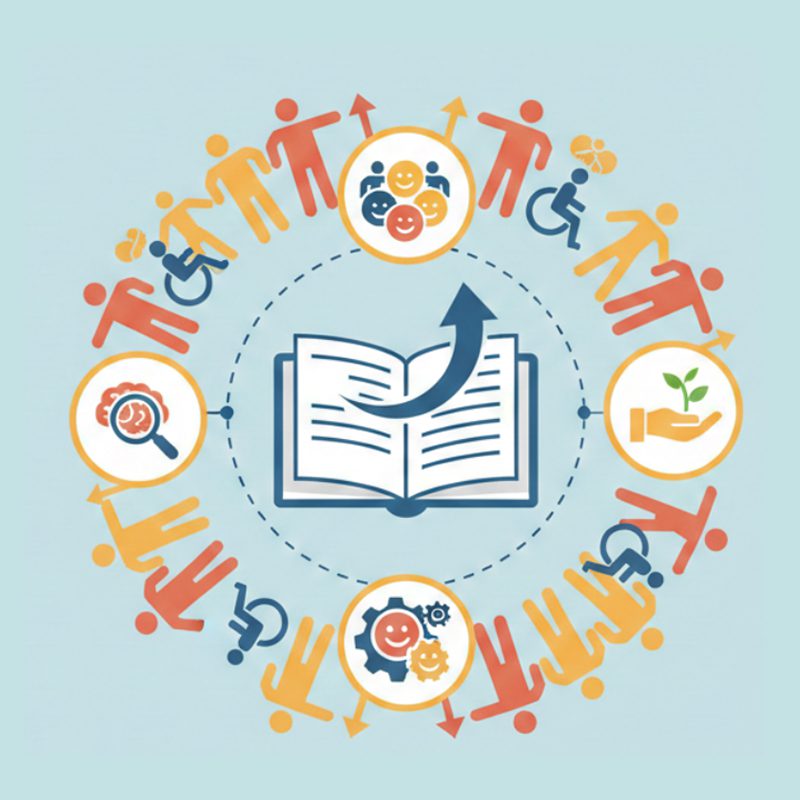
Inclusive education goes beyond access and has more to do with equity, dignity, and meaningful participation. For people with intellectual disabilities (ID), being included in regular classrooms with a supportive, flexible curriculum can help them reach their full potential, learn how to interact with others, and change their lives.
Globally, inclusive education is recognized as a fundamental human right. Leading frameworks, including those of UNESCO and UNICEF, define inclusive education as a system that welcomes all learners and removes barriers arising from disability, language, socio-economic status or other marginalisation. For children and young people with intellectual disabilities, inclusive education combined with curriculum modifications and supportive teaching methods is particularly effective. Studies examining results for students with intellectual disabilities in inclusive environments compared to segregated special education institutions indicate that those in mainstream classrooms frequently achieve higher advancements in literacy, mathematics, and social-emotional growth.
Inclusion goes beyond simply putting a student in a regular classroom. Without careful curriculum and teaching adjustments, inclusion may turn into a superficial presence rather than true engagement. For individuals with cognitive disabilities:
- Curricula based on age and grade level frequently misalign with students’ cognitive or psychosocial development. Rather, education ought to be directed by personal ability, hands-on experiences, and goal-oriented material.
- Traditional teaching methods may not work; alternatives such as Universal Design for Instruction (UDI) and differentiated instruction are needed to make learning accessible and effective for all.
- Flexibility in pace, assessment, and supportive reinforcement makes learning inclusive. Curricula should focus on life skills, job preparation, social-emotional learning, and real-world relevance, not just academic metrics.
Such a design ensures that learners with ID are not just accommodated; they are empowered. Inclusive classrooms benefit not only students with disabilities but also their peers without disabilities. Being exposed to diversity increases empathy, social skills, cooperation, and mutual respect. Research shows that inclusive education improves academic and social outcomes for everyone involved. Moreover, inclusion reduces the need for separate systems, making education more affordable and socially connected.
What Diya Foundation Advocates
At Diya Foundation, we believe inclusion is both a right and a shared responsibility. Our work focuses on advocating for and enabling inclusive workplaces for individuals with intellectual disabilities by strengthening pathways from foundational learning and skill development to meaningful employment and active community participation.
Our approach advocates:
- Adapting curricula to meet learners where they are, using individualised plans or group-level differentiation, not rigid grade-level modules.
- Training educators on inclusive pedagogy, differentiated instruction, assistive practices, and compassionate classroom management.
- Creating supportive environments both in infrastructure and the school/institute’s culture where learners with ID feel valued, safe, and motivated.
- Fostering social inclusion through peer interaction, group projects, community engagement, and life-skill training.
By doing this, we want to make learning both accessible and meaningful, dignified, and empowering.
It is still difficult to implement inclusive education widely, especially for learners with intellectual disabilities, in many situations. Some common barriers are:
- Lack of teacher training and awareness; many educators feel unprepared to teach diverse learners.
- Curriculum rigidity and examination-driven systems that resist flexible pacing, assessment, or adaptation.
- Insufficient infrastructure, classrooms, assistive devices, learning materials, and support staff.
- Social stigma and low expectations from communities hinder inclusion.
But these challenges are not impossible to overcome. Research and practice show that with firm policy commitment, strong institutional will, proper educator training, and community support, inclusive education can become the norm instead of the exception. Inclusive education, specially designed for individuals with intellectual disabilities, is essential not only for their personal growth but also for social justice, diversity, dignity, and community resilience.